
Table of Contents
- Why Genetic Testing Matters for Coton de Tulear
- Coton de Tulear Health Testing: Which Tests Responsible Breeders Run
- How to Read Dog Genetic Test Results
- Genetic Testing Cost for Dogs: What to Expect
- Coton de Tulear Breeder Health Clearances: What to Ask For
- Beyond DNA: Additional Health Screening for Adult Dogs Before Breeding
- Genetic Testing in Mixed-Breed and Designer Dogs
- Common Misconceptions About Genetic Testing
Last Updated: October 5, 2026
Why Genetic Testing Matters for Coton de Tulear
Genetic testing for Coton de Tulear is essential for responsible breeders and owners.
The breed carries specific genetic vulnerabilities that responsible breeders screen for. At Yankee Cotons, genetic testing is a cornerstone of ethical breeding.
Testing adult dogs before breeding separates responsible breeders from those cutting corners, eliminating guesswork about which weaknesses might pass to offspring.
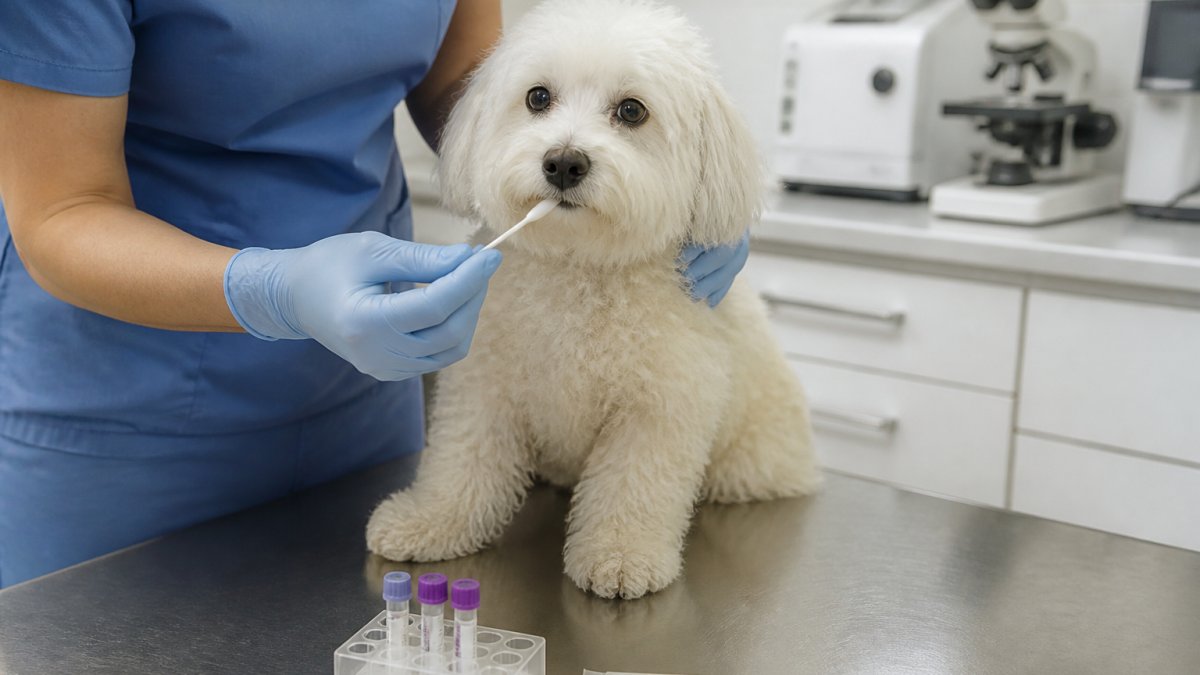
The process is straightforward: a cheek swab from each parent goes to a laboratory, with results in 2-3 weeks.
Coton de Tulear Health Testing: Which Tests Responsible Breeders Run
Breed-Specific Genetic Conditions to Screen For
The Coton de Tulear is predisposed to several inherited conditions genetic testing can identify.
Progressive Retinal Atrophy (PRA) is one concern:the retina degenerates over time, eventually causing blindness. Early detection lets owners and veterinarians monitor vision and plan accordingly. Canine Multifocal Retinopathy is another eye condition that can be tested.
Kidney diseases, also appears in some lines. Testing identifies carriers before breeding, preventing its spread such as Hyperuricosuria and Hyperuricemia or Urolithiasis, or Primary Hyperoxaluria.
A test for the bleeding disorder, Von Willebrand Disease Type I, Type I vWD is also available.
The very common disease called Chondrodystrophy and Intervertebral Disc Disease, CDDY/IVDD, Type I IVDD can also be present, though it is not a simple dominant recessive type of expression in cotons.
And finally, Bandera’s Neonatal Ataxia is a breed specific issue for cotons.
Recommended DNA Tests and Health Screening
Beyond DNA, responsible breeders conduct orthopedic screening through radiographs evaluated by veterinary specialists.
Ophthalmologic examinations by board-certified veterinary ophthalmologists can be performed, checking for PRA, cataracts, and other inherited vision problems. Screening can be repeated periodically.
Cardiac screening, including echocardiography, identifies inherited heart conditions. Some Coton de Tulear lines carry predispositions to heart disease, making this screening valuable for breeding decisions. Usually, a basic cardiac exam is done by the primary veterinarian and if a problem is documented further assessment by cardiac specialists are performed.
How to Read Dog Genetic Test Results
Understanding Carrier, Clear, and At-Risk Status
Genetic test results use three primary classifications: Clear, Carrier, and At-Risk.
A Clear result means two normal copies of the gene.
A Carrier result means one normal copy and one mutated copy. Carriers show no symptoms but can pass the mutation on.
An At-Risk result means two copies of the disease-causing mutation. Depending on the inheritance pattern, the dog may develop symptoms, and breeding is generally not recommended.
What Results Mean for Breeding Decisions
Understanding your breeding dog’s genetic profile turns guesswork into informed planning.
When one parent is a carrier and the other clear, statistically half the litter will be carriers and half clear.
Pairing two carriers is riskier: roughly one-quarter of puppies will be at-risk, half carriers, and one-quarter clear.
Never breed an at-risk dog: the ethical responsibility to prevent suffering outweighs any individual dog’s breeding value.
Genetic Testing Cost for Dogs: What to Expect
Cost is the question most owners search for, and the one most pages never answer. Here is the practical breakdown.
DNA Test Pricing
Canine DNA testing is priced in tiers, and the tier you need depends on whether you are a pet owner or a breeder.
- Single-condition tests (one mutation, one gene) typically run in the low tens of dollars per condition, useful when you already know which mutation you are chasing, such as confirming PRA status in a line.
- Breed-specific panels bundle the mutations most relevant to one breed. For a Coton de Tulear, a panel covering the breed’s known inherited conditions generally lands around one to two hundred dollars per dog.
- Comprehensive panels covering 200+ mutations plus ancestry and trait reporting commonly run about one hundred fifty to two hundred fifty dollars, and are the panels most often sold direct to consumers.
Prices change and laboratories run promotions, so treat these as planning ranges and confirm current pricing on the laboratory’s own site before ordering.
Not all canine genetic testing companies cover all recommended tests and there are other conditions that while not considered breed specific can affect coton de tulears.
The Non-DNA Screening Cost
DNA is only part of a pre-breeding budget. The orthopedic, ophthalmologic, and cardiac screening described above carries its own costs:
- Hip and elbow radiographs require sedation or anesthesia, films, and a submission fee to the evaluating registry, usually the largest single line item in a breeding dog’s health budget.
- Ophthalmologic exams by a board-certified veterinary ophthalmologist are typically a modest office-visit fee, with discounts at breed club clinics.
- Cardiac screening via echocardiography or auscultation by a board-certified cardiologist is priced like a specialist consult and varies by region.
Turnaround Times
DNA turnaround depends on the laboratory and panel:
- Most direct-to-consumer cheek-swab tests return results in two to four weeks from sample receipt.
- Breeder-focused panels from larger veterinary genetics laboratories often run two to three weeks.
- Expedited options exist at some laboratories for an added fee.
How to Think About the Math
A single litter with one affected puppy can generate veterinary bills that dwarf the entire pre-breeding screening budget for both parents. Compare cost against treating a hereditary condition over a dog’s lifetime, not against the price of doing nothing.
How to Compare
Compare on three axes rather than price alone: how many Coton-relevant mutations the panel covers, and whether the report names each mutation with a clear genotype. A cheap panel testing the wrong conditions is no bargain.
Coton de Tulear Breeder Health Clearances: What to Ask For
Verifying Health Test Documentation
Responsible breeders keep detailed health records and share them freely. The key word is verifiable: verbal assurances and screenshots are not documentation.

For DNA tests: Ask for the laboratory report itself, not a summary.
WANT TO KNOW MORE ABOUT YANKEE COTONS? →
For eye screening: The Canine Eye Registry Foundation (CERF), now the OFA Eye Certification Registry, issues exam numbers from board-certified veterinary ophthalmologists, also searchable in the OFA database.
Questions to Ask Before Buying a Puppy
Bring this list to the conversation. A breeder with a real testing program will answer all of it without hesitation.
On the parents:
- Which specific DNA tests were run on the sire and dam, and through which laboratory?
- What are the results for each condition, by name?
- Have both parents been screened for hip dysplasia, and what are their OFA or PennHIP results?
On the breeding decision:
- Given the parents’ carrier statuses, what is the expected genetic risk for this litter?
- How did you decide this pairing was appropriate?
- What is the coefficient of inbreeding, and how do you manage genetic diversity?
On the paperwork:
- Will I receive copies of the parents’ test reports with the puppy?
- Can my own veterinarian review the records before I commit?
Red Flags
- Results described only in words, never in documents.
- Test reports with no laboratory name, date, or mutation names.
- A breeder who claims testing is unnecessary because “the line is healthy.”
None of these guarantees a problem, but each shifts the burden of proof onto you. A breeder who tests properly has nothing to hide.
Beyond DNA: Additional Health Screening for Adult Dogs Before Breeding
Genetic testing provides crucial information but is not the complete picture. Adult dogs considered for breeding should undergo thorough veterinary examinations beyond genetic screening.
Bloodwork and urinalysis reveal organ function, thyroid health, and other systemic factors.
Behavioral assessment matters as much as physical health.
Nutritional assessment ensures breeding dogs maintain optimal body condition. Breeding takes a physical toll, and dogs in excellent nutritional health recover better and produce healthier puppies.
Genetic Testing in Mixed-Breed and Designer Dogs
Mixed-breed and designer dogs benefit from genetic testing just as purebreds do. A DNA test reveals ancestry composition, helping owners understand health predispositions and likely behavioral traits.
Designer mixes, intentional crosses between two breeds, inherit conditions from both parents.
For breeders working with mixed or designer dogs, genetic testing is as important as with purebreds: understanding what conditions might emerge in offspring allows informed decisions that prioritize puppy health.
Common Misconceptions About Genetic Testing
A widespread misconception is that genetic testing guarantees a healthy puppy.
Another misunderstanding is that carriers should never be bred.
Some believe DNA testing alone is sufficient.
Finally, many assume all genetic tests are equally reliable, but laboratory quality, breed-specific panels, and interpretation expertise vary.
Genetic testing for Coton de Tulear is a commitment to breed health that extends far beyond a single litter.
Leave a Reply